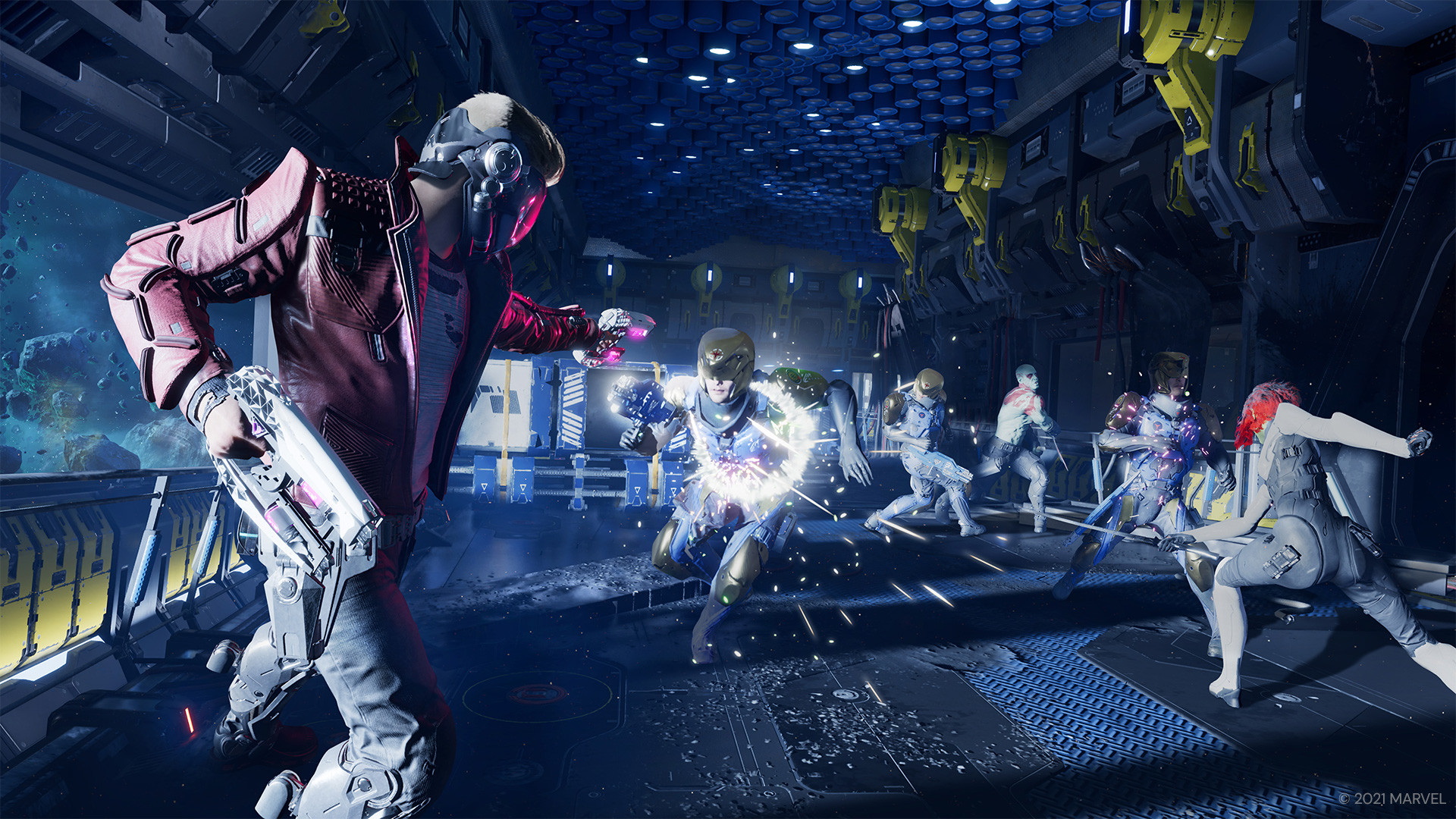
There’s a good chance that when your gaming group shares stories about their favorite gaming moments, nobody ever says, “Hey, remember that time we stumbled across that orc encampment, and there were precisely the right number of them to fight, so that we felt a little threatened but not really too much?” “Oh yeah, I drank a minor healing potion! EPIC!”
Balance is good. And that means it’s the enemy of perfect. Let it go.

When you skip steps on the encounter budget staircase, a great way to counterbalance your rule of cool is using the environs that characters will playing. After all, why should it only be epic monsters that get lair actions?
I’ve found that one of the best ways to offset players being outmatched is to give them tools in the world around them that allow a turning of the tide, changing “unbeatable” encounters into manageable ones. Players get to walk away feeling clever and awesome, and the GM doesn’t have to spend ages tweaking encounters or fudging dice rolls to get through it.
Sometimes the best tools you can give players are inadvertent ones—or only semi-planned ones where you leave the ingredients for fun lying around leading up to a big encounter.
For example, maybe strewn throughout the areas leading up to your imbalanced encounter there happen to be some empty bottles or jars, and in another area, a leather tanning station happens to have some volatile chemicals lying about. All the players need to do is rip up some cloth and they’ve got firebombs!
Inadvertent tools don’t always have to be so synergistic either. Locales can contain seemingly mundane items: in my last adventure set in a swamp, there were abandoned rowboats, block and tackle, rusty spears, and bags of crocodile bones. They might prove useful one way or another, but they don’t have to.
Players later used those rusty spears to bar a door shut along with wood from the boats while they immolated a den full of undead inside with the tanning chemicals. Shame the crocodile bones didn’t get used!
These are fun because it can be a surprise to both the players and the GM. However, these kinds of things don’t always make magic happen unless you beat the players over the head with hints. do enjoy metagaming, but leaning on an aspect like this too hard in order for characters to succeed is something perhaps too risky to be reliable.
The better way to do this is to pepper your environments with actionable items. It’s not work-related! Actionable items are things like steps that crumble when walked on, ballistae, moving platforms, chandeliers to swing from, runic circles of power to stand in, and the list goes on forever. (There’s a whole section of these in Book of Blades.) I like to put these things in a few categories: boons, hazards, obstacles, and traps. There are also a few others I like to use, banes and gambits, but we’ll save those for the article on risk vs. reward.
For now, let’s break down these actionable items. What are they, and how do characters actually use them?
Boons/Blessings. These are purely beneficial elements that largely benefit the PCs, such as a weapon their oafish enemies couldn’t fathom operating, an ancient barrier that prevents magic from passing through it in one direction, hallowed ground where spirits of past fallen adventurers whisper advice into their ears, a cracked yet workable orb that casts magic missiles (unlikely to be taken advantage of by a horde of zombies), and so on. The method of interacting with these is simply for characters to use them.
Hazards. Hazards are environmental effects such as poisonous gas emanating from a cluster of mushrooms, bedazzling bioluminescent lights from creatures clung to a darkened ceiling, pits, pools, perforations, and other more conventional hazardous terrain. The methods of interacting with these things are typically avoidance, mitigation, or nullification. With the right moves of course, foes can be forced into these hazards while the characters play it safe! (These are a feature of the Tales of the Valiant RPG, by the way. Check them out in detail in the Game Master’s Guide.)
Obstacles. Different from hazards, obstacles are large environmental objects that can hinder or alter characters movements depending on who’s navigating them. Things like climbable scaffolding for a height advantage or for accessing an exit or boon, a mass of brambles for smaller characters to hide in and attack from, a chasm bridged by a fallen (potentially crumbling) pillar, or a deactivated golem that might animate if the right words are spoken. The method of interacting with obstacles is usually traversal, avoidance, or destruction.
Traps. It may seem odd to differentiate traps from hazards and obstacles, but traps are truly their own beast. While fifth edition hasn’t given them the focus they deserve [ed. note: ToV fixes this! Check the Player’s Guide or GMG!], it doesn’t mean you shouldn’t use them liberally. They can be anything from complex pendulum blades to rolling marble statues to a convoluted series of buttons and levers that force parts of the environment to move, disappear, or otherwise vastly change how combat flows or how characters make decisions. The main ways to interact with these are avoidance, neutralization, triggering, or destruction. Also, traps don’t always need to be aimed at the players; some of the best traps are the ones the kobolds set for the adventurers only to have triggered on themselves.
Making things interesting for your players can be as easy as having the encounter happen near an abandoned bolt thrower, or as convoluted as involving several moving platforms, each of which possesses a sigil that grants a different boon that aids in defeating their enemies.

Take inspiration from your favorite films, books, and movies. It’s worth noting that most of those stories from your favorite media aren’t designed to be “balanced encounters,” and the situations contain absolutely bonkers odds. You should give your players some of those feels when you can. Sure, it can incorporate more moving parts than your standard initiative count of players and monsters, but it’s rewarding when your players still talk about that absurd encounter with the beholders and the mirror pillars that caused its eye beams to bounce around the room like an ‘80s night club.
When you give players the tools to be creative or turn the tide of a battle, unique things pop up. I’ve seen sarcophagi lids used to build makeshift barricades, surf boards, and even a bridge. Turns out sarcophagus lids are basically the Flex Tape of RPGs. I once had a party stuck in a pit use adhesive to stick gold coins together to make handholds which they then glued to the walls to climb to escape because they were out of spells and had lost their grappling hook. Afterward. they were poor but alive!
Anyway, think of all of these action items like little toys, little badges you can pin to your encounters. How many pieces of dungeon flair are you using tonight? Next time we’ll be talking about risks and rewards worth (maybe) dying for.
The post The 4th Pillar | Balance has no place in your game’s work-life – February 2, 2026 appeared first on Kobold Press.
Hey folks, For some reason, we have never posted a blog when we have released a copy of the Frontier Times . Why? Don't know. Madness. So, for both all Starship Scavenger players and anyone who enjoys a little satire, let me present this copy of the Frontier Times, Issue 4941. To get the pdf version, which comes with all the previous issues , go to the downloads page and click and download your very own copy, for absolutely nothing. It's a freebie! https://www.thegrinningfrog.com/downloa...

Drawn to the mystery surrounding the town of Kazhangrad, I traveled to the ancient city in hopes of unveiling what lies in this strange land. I had an appointment to interview the new ruler, Boyaryna Krovivna.
Rumors have circulated that some townsfolk are going missing. Yet somehow, there is no public outcry. No curiosity. Does it happen so often that it has become the norm?
Upon arriving, the sky is cloudy, and a mist hangs in the air. The land seems fertile, teeming with life. On the hill just ahead stands Castle Kazhangrad, home to Boyaryna Vieira Krovivna and her sisters, Voronika and Nytsaya.
Here in the old country, “boyaryna” is the feminine version of “boyar,” a noble title still used by traditional aristocracy. And the Krovivna family has always been firmly traditional in their ways. Yet, as this interview reveals, perhaps even the Krovivnas are not immune to the passage of time.
The estate has manicured gardens, and an ancient family cemetery greets visitors coming up the path to the castle. Several mausoleums and headstones look worn and covered in lichen. At the steel gates to the castle itself, the Boyaryna greets me in person. She bears a striking figure, framed by the gate’s arch, sipping from a wine glass under the cloudy sky. She greets me and gestures to follow her inside.
Inside, a seating area under a grand staircase is warmed by a fire. The room is perhaps a little too warm, and the furniture is all at least a century old. The Boyaryna pours a glass of her wine for me and leans back onto her divan, relaxed in her element.
V: Thank you for coming. I feel like it’s time to clear the air of any misconceptions about me and my sisters.
You see, I don’t understand why people think that my sisters and I are tied to a male figure. Perhaps to control us? Imagine a man controlling us! He would be outmatched— and outnumbered.
For centuries, we were told that we would need to marry or else our closest male relative would take my father’s place. But I am the eldest daughter of Boyar Nikolai, and I am entirely capable of ruling. So I defy that old order. I alone shall rule in my father’s stead.
V: Oh, our cousin who came to claim my birthright? His name escapes me, but I assure you, I feel gratitude for what he did for us. He gave our family immortality, after all. But what people fail to understand is that he was a necessary sacrifice. After the ritual, once his blood coursed through our veins, we gained our true power, and for that, my sisters and I thank him.
V: I disputed his claim, but his passing is the passing of that line. When I became Boyaryna of Kazhangrad, I dropped the family name Orlyk and wish to be known as the Krovivna. I know names are important to succession, but make no mistake, I am the heir to this kingdom.
I rule this land with my sisters Voronika and Nystsaya by my side. The townsfolk may fear us due to the rumors that spread. But we rule fairly and just.
V: Yes, I am the “boogie-woman.” Boo! Ha ha.
I do have some supernatural abilities now, as do many people in the realm. I use it to watch over my subjects. You see, when I show myself, they do not act freely. If I wish to know them, learn about their lives, I must move in secret. I do wear disguises to blend in, yes. This is known.
V: Fine. Yes, I change shape! A mist, or some animal. Is that what you’ve heard? This is why I need to move freely among my people. To hear the most outlandish things they say.
V: I would be interested to hear who you heard that, so I can clear up any misunderstandings. Did you know, however, that what many humans call vermin, is actually one of the cleanest animals? Rats are cunning, and they’re not nocturnal. They move silently, and are often where you don’t expect them. They have much to recommend them. Tell me more of the rumors you hear, so I can clarify.
V: A fallacy! Although tacky relics don’t have a place in the new immortal Krovivna family. We have no more need for “salvation.” We have saved ourselves.
V: The thought of another dreary question. I feel as though you’ve asked so many already. Would you like something to eat? I haven’t eaten all day.
The hairs on the back of my neck stood up. The way she said it was not an invitation, and a smile crept across her face that as though an idea had just come to her.
I thank the Boyaryna for her time and stand to leave. A cold breeze and muffled screams fly down the staircase as ghostly hands ascend from the floors.
I turn and sprint for the door. Mocking laughter followed me out the front door and all three sisters’ loud cackles followed as I fled the castle gate and past the cemetary. At the tree line, I looked back and saw their shadows on the front window. Their faces were shrouded, but the memory of their glowing eyes follows me well past the turning the road where I couldn’t see them.
The post Night Hunters Exclusive! Interview with a dread villain – January 30, 2026 appeared first on Kobold Press.

Silent Hill. Twin Peaks. Salem’s Lot. Derry.
There’s no shortage of bad towns in horror fiction. Thanks to ol’ Steve King and H.P. Lovecraft, a lot of them are in New England. But they can also pop up in your campaign.
If you were haunting the blog last week, you’ve already got some ideas on making your own bad town, the flavors of horror we’re working with, and how we can weave those flavors through our worldbuilding (in this case, town-building) like a nightmarish pint of Cherry Garcia.
This week, we’re going to talk about weaving a spell to make your bad town come out of the shadows more artfully once the PCs arrive. It’s a great way to ramp up for your Night Hunters game!
As anyone who grew up in one can tell you, small towns thrive on secrets.
In horror fiction, an entire town’s behavior can be dictated by a shared secret, whether it’s the knowledge that the town’s rulers are a clan of hungry vampires, or that outsiders are routinely taken from the local inn for purposes unknown, or whatever your imagination can conjure. People look the other way. They stare down into their tankards when certain topics are broached. They may even knowingly serve the horrible truth buried beneath their bad town.
At the table, a small-town with a horrific secret is an irresistible invitation to investigation and adventure. The challenge is creating a secret that survives first contact with a rowdy bunch of adventurers expecting . . . something. To that end, a small-town secret should be:
They’re ritual spells, to be exact. They require time, maintenance, and can transform their surroundings.
Like rituals both at the table and in real life, they persist because people keep performing them. And like any other spell, think of secrets as consisting of verbal, somatic, and material parts. Check the Components of a Secret table for the components and their expressions.

| Component | Expression |
| Verbal | Who knows the secret, and how they talk about it? Do some villagers hint at dark truths, or do they all smile blankly and repeat the same rehearsed reply? |
| Somatic | What routines, customs and taboos exist because of this small-town secret? They make people act unusually. Think especially of rituals that would seem irrational to outsiders who don’t know what’s going on. |
| Material | What physical evidence is left behind? It might be a traveler’s wagon hastily concealed in the swamp outside town, a demonic contract struck by the city founders, a nursery rhyme that conceals a deeper truth about your settlement, or the standing stones that conceal a sprawling tomb. |
Designing your small town and its terrible secret using this spell model has a few advantages. For starters, uncovering the secret at the heart of your small town can be approached from multiple angles. Talking to the townsfolk, exploring the environs, and observing behavior and customs (perfect for all you lore-hounds!) can all point your players deeper.
Another upside is in helping you think of a secret as something that needs to be maintained, and consequently how it responds to “damage” to one of its component parts.
For example, finding the hidden wagon in the swamp doesn’t expose anything, but mentioning it to the locals might prompt a change in their behavior, or it may create an opportunity for a perceptive player to catch an NPC in a lie. Disrupting the local harvest festival might cause villagers to reveal they’ve been nightmare fish-people the entire time, but doesn’t immediately bring your players closer to discovering the sleeping Void Horror at the bottom of the lake. Each element of the secret is a clue the drives you closer to the truth, and the whole thing doesn’t immediately collapse under the investigative prodding of your party.
Below are a series of tables that offer up the terrible truth at the heart of a small town, along with the verbal, somatic, and material components of keeping it secret. As an added bonus, a reaction table covers some potential responses to your party’s efforts to uncover the truth.
| d12 | Secret |
| 1 | This prosperous desert trading town survives by offering unwary travelers to the kineater (see Monster Vault 2) that nests beneath it. |
| 2 | The founders of the town drove the previous inhabitants of the area into a series of caves and used dark magic to transform them into grimlocks (see Monster Vault 1). |
| 3 | This village was put to the sword by a group of cruel bandits. The inhabitants don’t realize they’re ghosts. |
| 4 | The mothman (see Monster Vault 2) sighted by the locals is the herald of retribution for a crime committed by the townsfolk in the past. |
| 5 | The village is built atop a doorway to the Deep Void. The villagers keep the secret to protect the realm. |
| 6 | This village is fanatically devoted to Mother Moth (see Tome of Beasts 3), enacting a yearly ritual in her honor than can be fatal to some participants. |
| 7 | Here, the dead rarely stay dead for long. |
| 8 | The new mayor of this crumbling, sad little town is a disguised night hag (see Monster Vault 1), harvesting sorrows from the unsuspecting locals. |
| 9 | The town is an illusion created by a sentient tome of eldritch knowledge to ensorcel and possess the party. |
| 10 | An unusual concentration of void fungus (see Tome of Beasts 3) has begun replacing villagers with murderous dopplegangers. |
| 11 | This idyllic, seemingly fun-loving town is held hostage by a young resident in possession of a wand capable of summoning an invisible stalker (see Monster Vault 1). |
| 12 | Everyone is a lycanthrope. Everyone. |
| d6 | Verbal Component. Who’s talking, who isn’t, and what they’re saying. |
| 1 | An itinerant cleric has noticed the locals have unusual customs and a peculiar local religion. |
| 2 | The village children speak in hushed tones of the sudden transformation in their parents’ personalities. |
| 3 | The town council, whose members seem to appear everywhere, keep a close eye on the other townsfolk, ever-ready to redirect or wave off unwanted questions from outsiders. |
| 4 | When pressed, these villagers smile vacantly and respond with a cryptic reference to unseen rulers. |
| 5 | Local traders warn travelers from the settlement, citing a feeling of being watched closely. |
| 6 | An outsider, recently married into the community, is having second thoughts after a recent event. |
| d6 | Somatic Component. How does keeping the secret affect behavior? |
| 1 | You notice every inhabitant bars the doors at night. |
| 2 | The villagers seem to know your every move, and you are rarely out of their sight. |
| 3 | Outbursts of emotion (laughing or crying, for example) in response to seemingly innocuous occurences. |
| 4 | The townsfolk exhibit extreme aversion to outsiders, questions, and especially adventurers. |
| 5 | Specific locations are heavily guarded, and the curious are quickly dealt with. |
| 6 | The settlement’s inhabitants participate in ceremonies kept secret from strangers. |
| d6 | Material Component. What did they forget to clean up? |
| 1 | Ritual implements, scrolls, and other spiritual artifacts. |
| 2 | Local legends, nursery rhymes, and folklore that obfuscate the truth. |
| 3 | Evidence of a previous exposure of the secret. |
| 4 | Contradictory records, evidence of a coverup, or missing time. |
| 5 | Attempts to secure the town, either against outsiders or threats from within. |
| 6 | Something that should have been disposed of, but wasn’t. |
| d6 | Reacting to Investigators. What happens when one of the components is picked at? |
| 1 | The inhabitants are dismissive of all evidence, to the point of absurdity. |
| 2 | The town arranges an accident for our curious party. |
| 3 | A group of townsfolk arm themselves and incite a mob against outsiders. |
| 4 | A scapegoat is made to address whatever findings are presented. |
| 5 | Rumors begin to fly, and the town’s cohesion is compromised. |
| 6 | The attempt to cover up the secret introduces new complications. |
As always, these tables are not comprehensive. If you notice something missing that’s better for you, pick that! We’re just exploring how to apply the concept of a “ritual secret” across different situations and circumstances, with an eye on horror and the unknown.
Small-town secrets are more than just a handwritten confession tucked away in the desk of an NPC that telegraphs “someone’s hiding something.” When we think of them as a spell causing an effect, we can think about how that spell permeates your bad town, what keeps it going, and what happens when it all comes spilling out.
The post Secrets are spells that transform your horror campaign, January-28-2026 appeared first on Kobold Press.

The most interesting stories, the ones we share the most over the years and that stick with us longest, are those that defy the odds.
There’s a good chance that when your gaming group shares stories about their favorite gaming moments, nobody ever says, “Hey, remember that time we stumbled across that orc encampment, and there were precisely the right number of them to fight, so that we felt a little threatened but not really too much?” “Oh yeah, I drank a minor healing potion! EPIC!”
Balance is good. And that means it’s the enemy of perfect. Let it go.

Lots of RPGs in the D&D vein have progression systems based on accumulating experience points (XP). They balance systems based on the difficulty of monsters and challenges therein, which grant XP accordingly, and the wheels of the game turn.
Because of this, we have guidelines on how to create balanced encounters, so players can be appropriately challenged. This is usually referred to as the encounter budget. The budget typically exists as a few pages of charts, a matrix, and perhaps a formula or two, outlining how to build encounters in varying levels of difficulty. Kobold Press even has a Web version to do the math for you.
Creating challenging, yet survivable encounters is a tight rope all game designers and GMs must walk, especially in games like D&D. While it’s advisable to follow these guidelines, especially when you’re new to the game, they don’t necessarily make for memorable combat experiences. Always sticking to these rules can wind up making encounters feel rote and stale. That’s why I’m here advising you to completely ignore them.
Of course, such recklessness needs some guard rails. Abandoning an entire set of rules requires a certain level of familiarity and mastery with a system, and intangibles like nuance and comfort levels.
Nuance and context are probably the two most important aspects of our hobby overall, both in the running and playing of the games, as well as in the social aspects and constructs that surround them.
For this series though, we’re focusing on the mechanical aspects. You probably shouldn’t jump straight to running a totally off-the-rails encounter without forethought and especially not if you’re playing with new folks. I mean, you could, and it might leave a great first impression! You probably shouldn’t though.
What I’m getting at is that it takes practice and some willing players to get there. If slavishly following the encounter budgets is akin to walking down a set of stairs while holding tightly to the banister and watching your feet as you take each step, then abandoning the budget is like sliding down that entire set of stairs blindfolded, riding an oil-slicked beanbag chair set ablaze.
I’m suggesting you get started here by maybe ignoring the banister or skipping every other step. Before too long, you’ll be leaping over the bottom set and eventually slapping on your DEAL WITH IT shades as you ride that slippery beanbag chair straight to Valhalla.
A great way to get some practice lies within the infamous one-shot adventure. An isolated play experience separated from your ongoing campaign is perhaps the best vehicle for this. One-shots are self-contained, they insulate beloved characters from death, and they can serve as a sandbox for your rule-breaking experiments. Eventually, you should have a good idea for how to create memorable, budget-averse encounters in your main game without going full Dark Souls on your players. Outside of one-offs, you can always just ease into spicing up one encounter at a time with something unpredictable. Game imbalance after all is more an art than a science.
The reason we’re looking to abandon encounter building budgets is to up the overall “cool factor” of how our games play out. When I say “cool factor” here, I mean specifically in regard to big combat, set pieces, or encounters that are otherwise kind of a big deal.

Now of course, every encounter doesn’t have to be a complex or super-dynamic fight. As Syndrome taught us, if everyone is super no one is. Same goes for encounter design. So pace yourself. If you dress up all of your encounters with epic bits, it will all start to blur together.
Think of it like armor in World of Warcraft. When everyone is riding around on gigantic ghost dragons wearing golden pauldrons set with skulls whose eye sockets swirl with magic . . . well then there’s really nothing special about any of that, is there? You’ve gotta save the whiz-bang for when it counts.
Also, sometimes it’s fun for a party to just come across a lone couple of orcs tracking something in the forest. Are they friend or a foe? Does the party fight, confront, follow, or ambush them? Whatever they choose, even 1st-level PCs can handle them. It’s two orcs. Which brings up its own set of questions. Encounters like this can be memorable without being over the top at all. You wouldn’t need to consult an XP budget for something like that anyway (all the more reason that the budget is near pointless).
Conversely, abandoning the budget doesn’t always mean “pile more monsters on the party than they can handle and see what happens!” either. Simple encounters like this help build tension. I’d almost advise for always going with encounters that are either small like this or really big. It’s that middle area where encounters start to feel “medium” and predictable.
Encounter budgets tend to skew things in that middle direction (again another reason to ignore them). Over time, when you build encounters without gazing into those matrices, you’ll find a nice comfy spot. It’s hard to describe a concrete process on how to get there though because every GM and set of players is their own unique situation. You can get there though—just keep plugging away.
It all boils down to the realization that abandoning encounter budgeting is a way for you to find your own niche. Once you know the rules, you know when to ignore them. It’s another lane for storytelling bandwidth really, and that’s rarely a bad thing.
It’s probably not for novice GMs. I mean, I feel I should say that for disclaimer’s sake. Honestly, I think even a novice GM should still go for it. It’s easy to dip your toe in the water. Toss in an unexpected monster or add a hazard and see what happens.
Try giving the party a few points of interest during combat other than the enemies themselves. Combat shouldn’t always revolve around the bad guys. Throw in a trap or a defenseless creature that needs protecting. If the players are outmatched, perhaps a stationary ballista happens to be nearby or a protective magical shield from a nearby mage’s tower can provide momentary respite amid the chaos.
We’ll talk more about environmental boons and hazards in the next installment. It can even the playing field, add dynamic gameplay, or ratchet up the risk factor.
For now though, just know that there are more ways to spice up encounters than just throwing another critter in. Starting there though, gives you wiggle room and familiarity. Don’t crank it up to 11 just yet. We’ll get there. Just remember: an interesting encounter is almost always going to be better than a balanced one.
The post The 4th Pillar | Ride the flaming beanbag to Valhalla – January 26, 2026 appeared first on Kobold Press.

That’s all it took for Night Hunters, our brand-new two-book horror toolkit, to reach full funding on Kickstarter.
As of today, four stretch goals have been unlocked: including the dread villain tracker PDF, two adventures, and more dastardly foes. And there’s more on the horizon.
We’re thrilled and humbled by the community’s support. Over the past few weeks, Kobold Press has gotten lots of questions about what player options are available in the Night Hunters book.
To answer those questions, Kendo sat down with Celeste Conowitch and Sarah Madsen, some of the brilliant creative minds behind the project, to give you the inside scoop. In this new Scouting Party video, the team dives into:
You don’t have to wait to get your hands on Night Hunters content. The FREE Night Hunters Preview PDF is available right now! Inside, you’ll find:
Download the Preview PDF Here!
The post Night Hunters Scouting Party & Player Options – January 22, 2026 appeared first on Kobold Press.

Silent Hill. Twin Peaks. Salem’s Lot. Derry.
There’s no shortage of bad towns in horror fiction. Thanks to ol’ Steve King and H.P. Lovecraft, a lot of them are in New England.
Okay, these towns aren’t bad, necessarily. Sometimes these places are merely wrong. Some of them are downright evil. Maybe your town is too good to be true, with impossibly perfect villagers flashing impossibly perfect smiles while something sinister lurks beneath the surface. It all comes down to the flavor of horror you want to conjure up.
What these bad towns have in common is a shared sense of the setting itself being a source of horror. They’re full of buried secrets and old lies. They’re places where evil walks and good people are scarce. Places that need heroes to stand against the night, or places that are looking to feed a few would-be do-gooders to the dark.
Using the guidelines spelled out in our trusty, cursed tome of Campaign Builder: Cities & Towns, we can ask ourselves five questions to plan our bad town. Sprinkling a particular flavor of horror on our answers can yield cannibal cults, Stepford villagers, occult abominations, and worse things.
Mix and match your results to create deeply dysfunctional towns that will get your players looking around every corner with all the trepidation of an unprepared GM on game night.
| d6 | Age |
| 1 | Body Horror. A new community unknowingly sharing space with a strange, corrupting fungus. |
| 2 | Cosmic Horror. Unmoored from time and space, appearing in this reality only infrequently, this town seems ageless and alien. |
| 3 | Dark Fantasy. A long-abandoned keep given new life by settlers from a fallen kingdom. |
| 4 | Folk Horror. An old and vibrant village built around a series of crumbling dolmens. |
| 5 | Gothic Horror. A timeworn, crumbling seaside town in the shadow of an ancient castle. |
| 6 | Monster Horror. A well-established community, built atop an older network of tunnels dug by . . . something. |
| d6 | Function |
| 1 | Body Horror. To serve as spare parts for a mad margrave’s medical experiments. |
| 2 | Cosmic Horror. This town conceals the entrance to a subterranean vault containing a slumbering creature from the Deep Void. |
| 3 | Dark Fantasy. A heavily fortified outpost serving as a launching point for expeditions into the surrounding environment. |
| 4 | Folk Horror. This successful agricultural settlement is famed for brewing a particularly good ale. Their harvest festival is the talk of the region. |
| 5 | Gothic Horror. A humble village built to serve the needs of a great cathedral, providing respite to weary pilgrims and would-be-prophets. |
| 6 | Monster Horror. A hunter’s camp in the deep, dark woods, this settlement reaps the bounty of the forest to export to outsiders. |
| d6 | Goods |
| 1 | Body Horror. Rare medicines and tinctures, unknown alchemical compounds, a seemingly limitless supply of strange meat. |
| 2 | Cosmic Horror. Ancient scrolls, mysterious artifacts, peculiar technological instruments for studying the stars. |
| 3 | Dark Fantasy. Skilled mercenaries, iron and steel weapons, rare enchantments, tomes of lost knowledge. |
| 4 | Folk Horror. Agricultural goods, primitive charms and fetishes, herbal remedies, potions |
| 5 | Gothic Horror. Art, statues, other cultural exports, family heirlooms plundered to sell to collectors. |
| 6 | Monster Horror. Fangs and claws of unusual size and strength, protective wards and amulets, rumors and whispered fears. |
| d6 | Size and Population |
| 1 | Body Horror. Medium-sized, seemingly no children. People here seem to recover quickly from illness, though elder denizens are kept out of sight. |
| 2 | Cosmic Horror. A small, cloistered groups of scholars, prone to vanishing and reappearing. |
| 3 | Dark Fantasy. A densely populated city of dark alleys, catacombs, and noble houses backstabbing their way to power. |
| 4 | Folk Horror. Small and isolated, with handful of families interconnected in a byzantine scramble of lineages. |
| 5 | Gothic Horror. A rural town with a medium population in decline. |
| 6 | Monster Horror. Sparsely populated by a group of hardened outcasts, periodically repopulated by a new group of hunters, refugees, and folks fleeing trouble back home. |
| d6 | Government |
| 1 | Body Horror. A technocratic panel of doctors, alchemists, and anatomists enforcing their will with abominable creations and life-extension magics. |
| 2 | Cosmic Horror. An unseen council issues directives via dreams and visions. |
| 3 | Dark Fantasy. A celebrated mercenary company has recently seized control of the settlement from its decadent and ineffectual rulers. |
| 4 | Folk Horror. The heads of each family line guide the community, informed by an ancient book of rites and rituals. |
| 5 | Gothic Horror. A feudal system of elites bound by tradition, old grudges, and embarrassing romantic entanglements. |
| 6 | Monster Horror. A brutally repressive regime under authoritarian leadership. Dissenting voices are sent outside the walls to face the wilderness alone. |
There’s plenty of horror to mine from each of these genres on their own, and this is by no means a comprehensive take on any genre of horror. However, Night Hunters, the Kobold Press horror book now on Kickstarter has a through discussion of horror genres and tropes, and how to bring them into your game. Check that out for a thorough treatment!

The real fun begins when you mix and match horror genres. Maybe your Cosmic Horror community of eldritch scholars has a tendency to disappear and reappear…changed. Add a dash of body horror by returning your scholars with extra eyes, a few tentacles, or perhaps hosting a Void-creature slowly transforming them into something else. Perhaps your body horror technocracy pushed their work too far, creating of a terrible monster they hide from the populace, even as lone villagers are picked off one-by-one.
To get your players in the horror mindset, let the setting do the talking. Unless the speaker is an actual, factual ghost, nobody ever got spooked by someone saying, “This is scary. You’re scared now.” You can take your players a heck of a lot further into fear and apprehension by taking what you want from these tables and hinting at the horrific implications.
Remember that even the nicest towns have secrets. A bad town’s secrets though, rot it to the core and leave your players with an urge to confront that evil, or flee from the dark in search of a nicer place to hang their hat.
The post Build-a-Barovia: Make Your Own Fantasy Horror Getaway – January 21, 2026 appeared first on Kobold Press.
The warrens are closed today, along with many businesses in the US, for Martin Luther King, Jr. (MLK) Day.
MLK was a leader in nonviolent action for civil rights change in the US. His leadership, courage, and faith still call people to work for racial unity.
Many Americans use the time off as a day of service. Check your local media about opportunities that might be available to you and your family today, or even in the days to come. This works even if you’re not in the United States! You can help your community wherever you are.
. . . I am cognizant of the interrelatedness of all communities and states. I cannot sit idly by in Atlanta and not be concerned about what happens in Birmingham. Injustice anywhere is a threat to justice everywhere.
—Martin Luther King, Jr, Letter from Birmingham Jail
If you have 20 minutes, try reading Letter from Birmingham Jail, an open letter that MLK wrote from prison during his work to end race-based oppression in the city of Birmingham, Alabama.
It’s King’s response to eight pastors who thought he was being too radical in his work for justice. King argued that citizens have a moral obligation to obey just laws and to disobey unjust laws. Read the full text here.
The blog will be back Wednesday with more ways to make your games cooler!
The post Closed today for Martin Luther King Jr. Day appeared first on Kobold Press.
The Kobolds have our scaly snoots to the grindstone as we tunnel into the new year, and we’ve got a shiny treat for you, in the form of nightmares and nocturnal horror.
That’s what you had on your 2026 wishlist, right?

Night Hunters unleashes a complete ToV and 5E horror toolkit for both players and game masters. It features supernatural subclasses, monstrous lineages, haunted origins, and an arsenal of new talents, spells, and cursed relics.
The Kickstarter launched on January 13, funded in under an hour, and blew through our first three stretch goals earlier this week. Lucky for you, there’s still plenty of hunt left in this death dog.
And we have just the thing you need to get your blood pumping: a FREE Night Hunters Preview PDF with new Cursebreaker cleric, Nemesis fighter, and Ancestral sorcerer subclasses! There are also new lineages, magic items, and a glimpse at one of the new dread villains! Did we even sav anything for the book? Oh yes, we did!

We also have new subclasses for the warlock and witch, and so much more. But we’re not ready to divulge all our secrets quite yet. For now, sup on the tasty morsels hinted at in the table of contents in the preview and follow along in the Kickstarter updates for all the latest news and previews!
And that’s just the Night Hunters book. There’s also the Night Terrors adventure book, the Shadow Oracle Deck, shadow tokens, and more goodies to unlock.
If you find this preview whispering to the dark parts of your heart or yearn to master the secrets needed to take down the villains that lurk in the shadows, head over and back the Night Hunters Kickstarter now!
We’ll be back in a week as Kendo leads a new Scouting Party to uncover more Night Hunters secrets!
What secrets shall we whisper in your ear about the Night Hunters Kickstarter release?
The post New subclasses for sorcerer, cleric, and fighter in the Night Hunters Preview! – January 16, 2026 appeared first on Kobold Press.

Here’s the thing about designing adventures for high-level play: most of the time, you’re fighting the wrong battle.
When Beth and I sat down to work on Temple of Dead Dragons for the Night Terrors anthology, we could’ve built the biggest, baddest boss fight you’ve ever seen. We could’ve stacked legendary resistances, lair actions, and enough hit points to make a calculator cry. And honestly? At 16th level, your players would’ve melted it anyway.
Because high-level characters are terrifying. They teleport across battlefields. They rewrite reality. They look death in the eye and say “not today.” Power isn’t the question anymore—it’s the default assumption.
So Beth and I asked ourselves: What actually scares a group of demigods?
The answer we landed on wasn’t a monster. It was a choice.
When Kobold Press invited us to contribute, they knew what they were getting. Beth and I have both spent years working in the darker corners of fantasy—tabletop, novels, comics, screenwriting, all of it. We’re comfortable in spaces where things get morally complicated, where the horror isn’t just what’s hunting you, but what you might become while hunting it back.
The image that became the foundation of Temple of Dead Dragons hit us both immediately: a dragon temple, once sacred, now repurposed into a hideous laboratory. Dead dragons stitched into new horrors. Beth especially wanted wing-membranes stretched across doorways like curtains. Holy ground turned into a cruel assembly line.
Beth dove deep into the body horror elements—not for shock value, but because there’s something uniquely disturbing about watching the line between “living being” and “useful components” dissolve. When you see dragon remains grafted into infrastructure, when you realize these creatures aren’t just monsters but products, that’s when the real horror settles in.
That’s when you start asking questions about what progress actually costs.

Here’s where I get genuinely excited about the design.
Many high-level adventures drops some kind of environmental mechanic into the final encounter—that’s not unusual. What we wanted was to make that mechanic actually mean something thematically.
Enter the Moonwell Pylons.
On the surface, they look like standard dungeon tech: attune to them, gain battlefield control, make the final fight more manageable. Players recognize that language instantly. But here’s the twist—every pylon you align makes the final boss stronger. More damage. More speed. Additional actions.
Spoiler alert: The very act of showing mercy makes your job harder.
We designed it that way because we wanted players to feel the weight of compassion, not just declare it. You’re choosing to inhibit yourself, to make the fight more dangerous, because you believe someone is worth saving. You have to look at your party and ask: “How much are we willing to risk for this?”
And the adventure never tells you what the right answer is.
The emotional core of Temple of Dead Dragons belongs to Mildrith and Corinthe—two sisters caught in the machinery of a lich’s ambition.
Mildrith survived by compromising. By participating just enough to stay useful, to avoid becoming raw material herself. She’s not innocent, but she’s not a monster either. She’s just someone who made the calculations we’d all probably make if we were desperate enough.
Corinthe is what happens when those calculations go too far. She’s been experimented on, torn apart, and stitched back together as something between weapon and warning. By the time your players meet her, she’s barely recognizable as the person she was. The question isn’t whether she deserves mercy, it’s whether mercy is even possible anymore. What is left of her to save?
Your players have to decide.
Is she something that can still be saved? Is a life of suffering better than no life at all? Or is destruction the only kindness left to offer?
There’s no universal right answer. That’s what makes it interesting.
Yeah, we were channeling Shelley while writing this. Not the Hollywood version, the actual novel, with its obsession over creation and responsibility, the way scientific triumph becomes moral catastrophe.
The temple is Victor Frankenstein’s lab scaled to mythic proportions. The archlich is “I wanted to see if I could” taken to its logical extreme. The stitched abominations are the bill everyone else pays for his curiosity.
And like Frankenstein, the real horror isn’t the monster. It’s the choices that made the monster inevitable.
Let me paint you a picture of what we’re hoping happens when you run this:
Your party walks into this temple, and at first it’s almost beautiful—soaring dragon-bone arches, moonlight filtering through wing-membrane windows. Then they realize those windows are made of dragons. That the beautiful is built on desecration.
They explore, and every room whispers the same question: how far is too far?
They meet Mildrith, and instead of a simple villain, they find someone complicated, someone who survived. Someone they might even understand, even as they hate what she’s done.
Then they reach Corinthe, and suddenly theory becomes practice. Do you try to save her? Do you fight to subdue instead of kill, knowing it makes victory less certain? Or do you treat her as a problem to be solved, another boss to burn through?
Whatever choice they make, they’ll carry it with them. This adventure doesn’t let anyone walk away clean.
High-level D&D gets a bad rap for becoming rocket-tag with bigger numbers. And sure, if all you’re doing is stacking hit points and resistances, that’s what you get.
But if you build adventures that engage with why characters have that power, with what it means to be someone who could reshape reality—then suddenly those levels matter again. Not because the fights are harder, but because the stakes are higher.
Temple of Dead Dragons trusts your players to grapple with real questions. It doesn’t preach at them or railroad them toward the “correct” ending. It just puts them in a room with impossible choices and asks: what kind of hero are you, really?
Beth and I couldn’t be prouder of what we built together. It’s dark, it’s Gothic, it’s genuinely uncomfortable in places—and it’s some of the best high-level design either of us has done.
I can’t wait for you to bring it to your table.
Your players are going to remember this one, and so will you.
The post B. Dave Walters design diary: What scares high level characters? – January 14, 2026 appeared first on Kobold Press.

The most interesting stories, the ones we share the most over the years and that stick with us longest, are those that defy the odds. That inherent unfairness can make for the most satisfying, beautiful, and rewarding experiences. If the stories of David and Goliath or Frodo Baggins and the Fellowship were “balanced,” they wouldn’t have nearly the same impact that they do.
When it comes to running your games, there’s a good chance that when your players sit around and share stories about their favorite gaming moments, nobody ever says, “Hey, remember that time we stumbled across that orc encampment, and there were precisely the right number of them to fight, so that we felt a little threatened but not really too much?” “Oh yeah, I drank a minor healing potion! EPIC!”
No one ever said that. It’s probably either a story that’s so wild that I won’t even attempt to make up an example here, a character death, a brush with death that came so close it felt like cheating, or some other unexpected event. There’s nothing unexpected about following charts and formulas for building encounters for characters to go up against. It’s quite the opposite actually. Reliable experiences have their place, but when it comes to making your games memorable, it’s best to use imbalance.

Balance as a design goal in RPG products is a relatively new concept, at least on the surface. Early RPG adventures weren’t so much about defeating the proper number of monsters or having a well-defined path to achieve a certain set of goals. They were mostly about exploration, investigation, and roleplaying.
Of course, they could have plenty of combat, but combat wasn’t the prime motivator. When gold was the currency that has become experience points, player characters didn’t need to fight at all to progress.
These scenarios made for clever, rash, or sometimes much-deliberated ideas that garnered PCs the wealth they desired. The “murderhobo” trope we’ve all come to know and dissect was born more out of latter editions of the game when optimization and lists of feats and prerequisites ruled the day.
With the rise in popularity of video games, especially multiplayer ones, the elements of balance became more evident and important, so each player could feel adequate compared to their teammates. This isn’t just about MMOs; this goes back as far as popular arcade games like Gauntlet, Turtles in Time, and many others.
These video games however weren’t built around a shared experience or the camaraderie and teamwork that tabletop games were. Sure, those elements were there but not really required and were more of a byproduct of simply playing a game together. The bragging rights, high scores, and a consistent experience playing them were at the forefront for these games.
As with all things, change wasn’t instantaneous, but ever since, the focus of modern multiplayer RPGs, both tabletop and electronic, has shifted away from more narrative elements and toward ensuring balance, which is why I’m here to talk to you about the lack thereof.
A trend is developing where we’re leaning more toward session XP or GM-driven level ups at pivotal story points for character advancement, using systems similar to Shadow of the Demon Lord, Savage Worlds, or Daggerheart. The Tales of the Valiant RPG offers both for GMs to use as they see fit. However, advancement isn’t the only thing tied to balance; it’s just one example of the motivators that grease the wheels of not only how and why we play games but also how we design them.
The direction of narrative games seems to be coming back into focus, but a lot of us are still hung up on building encounters by the book. We use hard-and-fast rules to create rigid combat set pieces in the middle of telling stories about underdogs and crestfallen heroes. These two things couldn’t seem more at odds with one another.
Frodo bearing the burden of the world on his shoulders, camping on a barren mountainside, and descended upon by seven ring wraiths is very far from anything I’d remotely call balanced, but it was definitely memorable.
Now this doesn’t mean that every story where the odds are skewed terribly against someone should always come out in a tide-turning series of events. If that happened too often, the magic of it all would dissipate, like a glut of superhero movies.
That would also defeat the entire purpose of this series, so while I’m not advocating for taking things off the rails 100% of the time. You want imbalance to feel like something special, to create memories that stick with your players. You’ve got to know when to use it and when not to. After all, all show is no show. We’ll navigate the dos and don’ts throughout this series and talk about ways to even the odds, handle the meta aspects, and find ways to set up entire campaigns full of imbalance.
In my next installment, we’ll talk more concretely about how to break out of your encounter building box. So take whatever budget, formula, chart, matrix, or riddle you currently use for building balanced encounters and get ready to tuck it away for a while. [ed note: but surely not the Kobold Press encounter builder!] We’re going to focus on making things interesting instead of reliable.
The post The 4th Pillar | Do you need balance in your roleplaying game? – January 12, 2026 appeared first on Kobold Press.
Hey all, This is simply to tell you that our special Twelve Days of Christmas event is now live. Come get a free family game, and a scary solo play Zilight: Christmas game! Snowman Run! is a free print and play party game where you race snowmen around the table and try to be the first across the finishing line. With rules only a half page long, this is fast and easy to play. I can attest to it being a lot of fun, as you have such options as the ability to steal cards from other players,...
Hey all, I'm not quite ready to do an end of year wrap blog just yet but I am ready to say, as I always am, thank you to everyone who has supported us over the year. We've had a great year at The Grinning Frog and that's because of all our wonderful supporters and customers -- whether on Gamefound, Kickstarter or the webstore. We want to give back, and we have two fun things coming your way - including a completely free game -- let's start with that! Snowman Run! is a free print and play...
We have NEVER done this before, but now the shop stock levels are all updated, and Christmas is coming, and that Black Friday sale thing is looming (that we in Britain don't really understand), well, we decided to have a sale! Yes indeed. EVERYTHING is 20% off with the following code: blackfrogsale
It seemed like we had a lull, and things were quiet, and then, just like those landmines in Helldivers 2 that I keep stepping on (great...
Due to the tariffs coming in at the end of the Month, the Royal Mail has suspended postal services to America. Yes, it is like Covid all...
I'll admit, I'm not very good at click bait headlines so I have to be honest about the numbers. After all, how does that old saying go --...
Free fantasy side quest designed for Final Quest game rules and usable with DnD, Pathfinder and similar RPG systems.
Status and news from the studio in June 2025
Free fantasy side quest designed for Final Quest game rules and usable with DnD, Pathfinder and similar RPG systems.